Discoveries
The unusual, as the official pages tell it
Nothing here is invented. The surprises are the ones NASA Science, the NSSDCA fact sheet, and the mission captions already offer — kept distinct where the wording differs.
A few of the official surprises, in one place. Each one is told at more length on its own page, with the fact sheet and NASA Science kept unblended where they do not say the same thing.
A day longer than a year
Fact sheet: 87.969 days, 1,407.6 hours, 4,222.6 hours. NASA Science: 88, 59 and 176 Earth days, and a Sun that can appear to rise, set, and rise again.
Ice in permanent shadow
NASA Science: water ice may exist at both poles, but only in craters that never see the Sun. The yellow on PIA19411 is radar evidence, not a picture of the ice.
Strange hollows
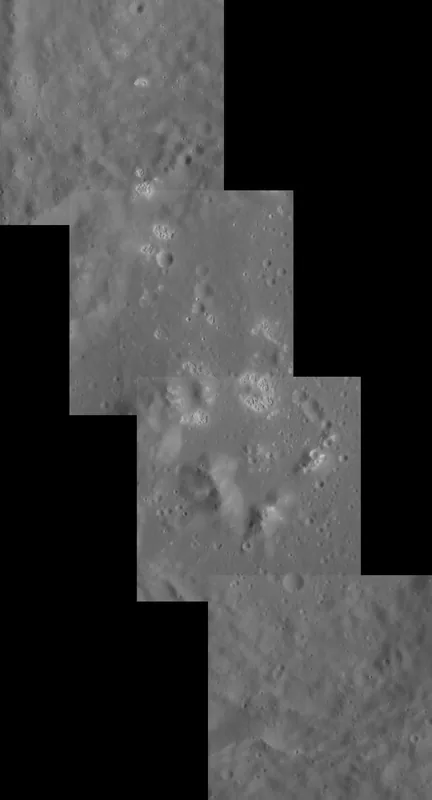
A NASA Science resource of 29 February 2012: thousands of peculiar depressions, 60 feet to over a mile across, 60 to 120 feet deep, discovered by MESSENGER from orbit.
A shrinking crust
NASA Science: cliffs hundreds of miles long, up to a mile high, raised as the interior cooled and contracted.
Closest, not hottest
NASA Science gives the hottest-planet title to Venus. Mercury's day-side 800°F sits beside a night that can reach -290°F on the same page.
A once-unseen hemisphere
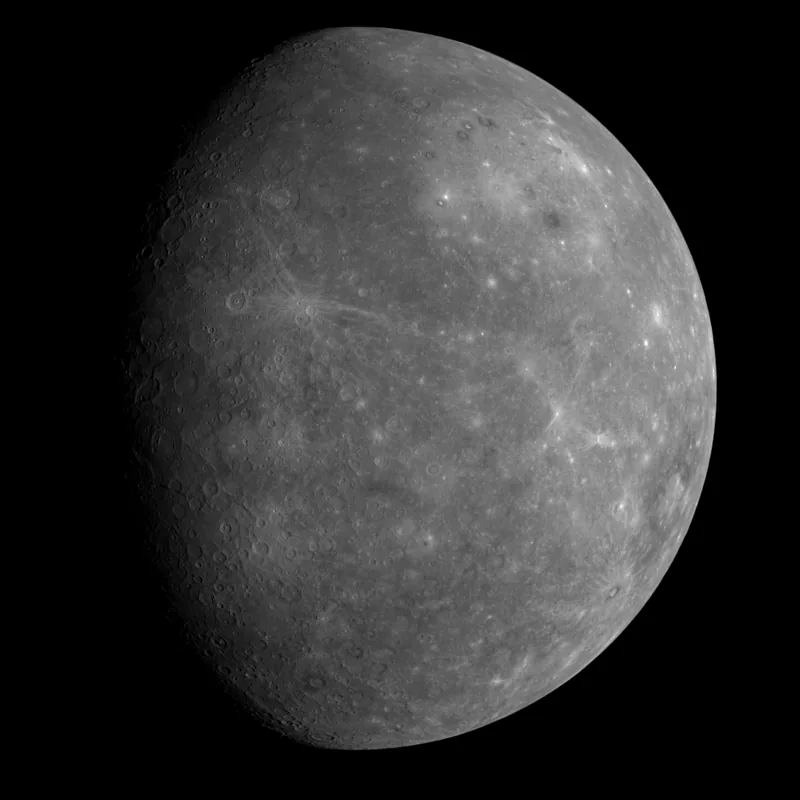
Mariner 10's first image is dated 24 March 1974. MESSENGER later photographed the side that those flybys never saw, and then became the first Mercury orbiter.
Enjoyed a day longer than a year, ice in the shadows, and hollows no one had named until MESSENGER looked closely?
No pop-ups. No intrusive advertising. Just interesting stuff. A little support helps the next planets.im site get built.