For families
A shorter walk around Mercury
The same official surprises, told with a little more room to stand and look.
This is a family desk, not a textbook. A few things worth lingering on together, all of them from official pages.
A day that is longer than a year
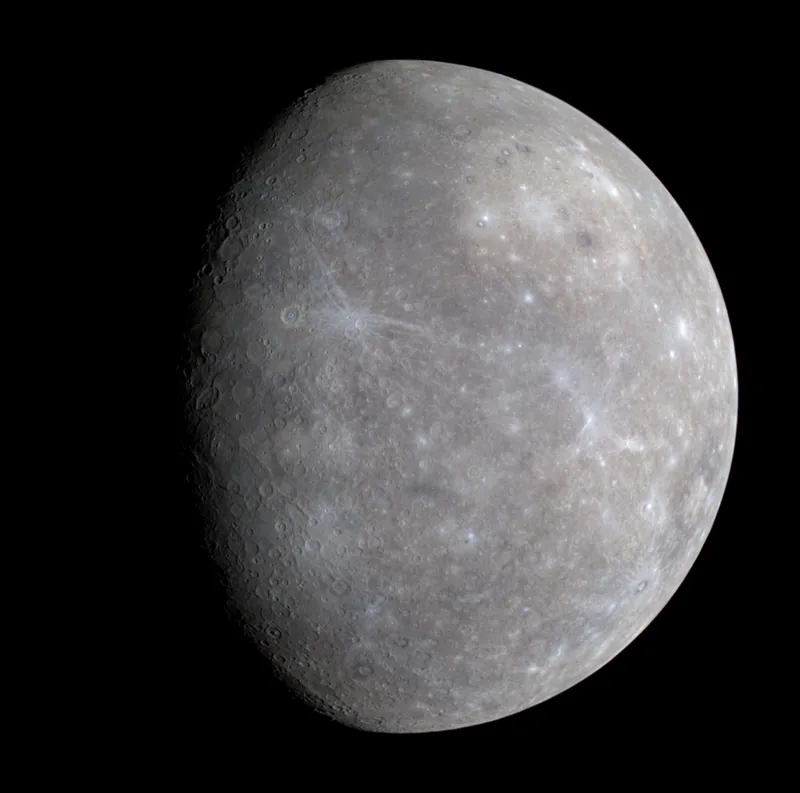
It sounds like a riddle, and it is just three official clocks. A year is one trip around the Sun. A spin is one turn on the axis. A day, here, is one day-night cycle — and on Mercury that cycle lasts longer than two of its years. The day desk puts the fact sheet's numbers and NASA Science's rounded wording in the same room.
Ice, in the one place the Sun never looks
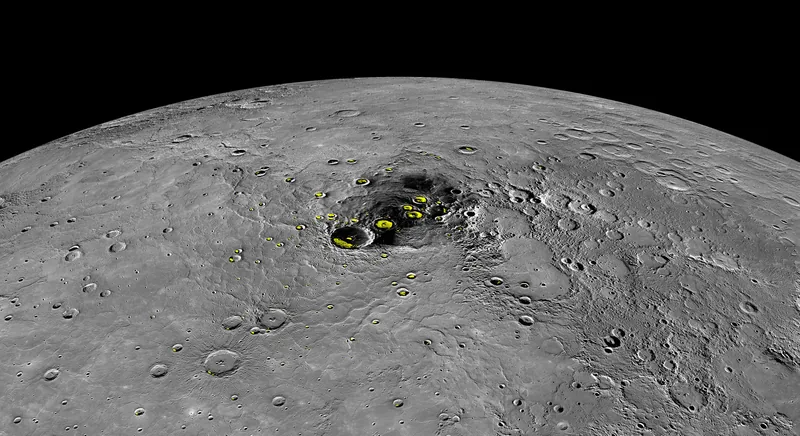
The closest planet to the Sun may still have water ice, but only in craters at the poles that stay in permanent shadow. The yellow on the official map is radar evidence, not a photograph of the ice. That distinction is a good one to practise.
A picture is not always what the eye would see
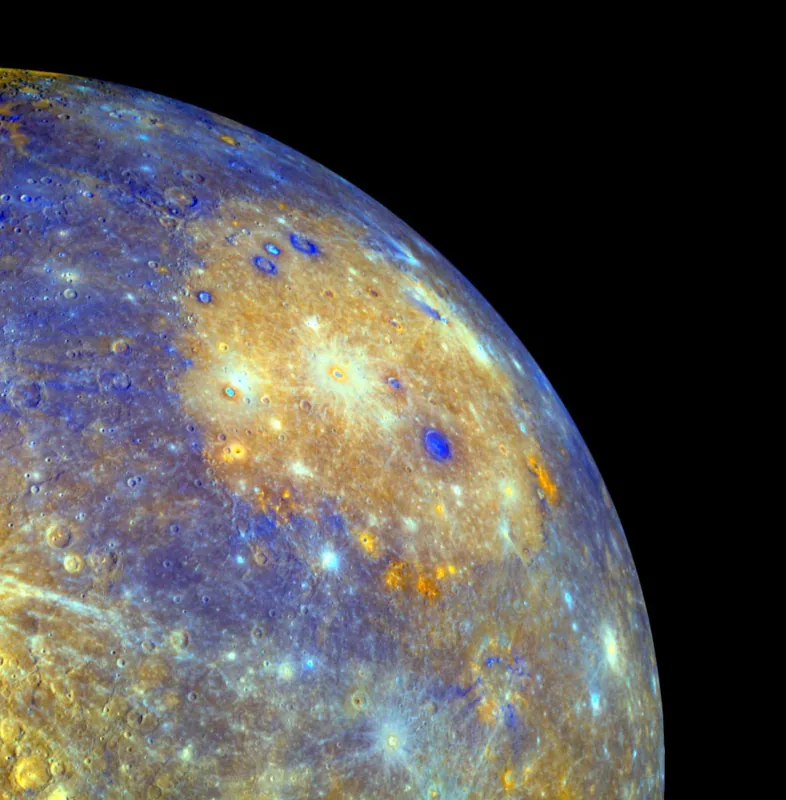
Some of the most striking Mercury stills are false-colour or enhanced-colour maps. They are honest when they are labelled. The orange Caloris basin is a statement about rock types, not a postcard of an orange planet. Most of the surface, NASA Science says, would appear greyish-brown to the human eye.
If you would like a gentle quiz after a wander, it lives at the quiz. If a figure on this site is rounded on one official page and precise on another, both wordings are supposed to be in view — and if they are not, that is a job for the contact page.
Enjoyed a day longer than a year, ice in the shadows, and hollows no one had named until MESSENGER looked closely?
No pop-ups. No intrusive advertising. Just interesting stuff. A little support helps the next planets.im site get built.